


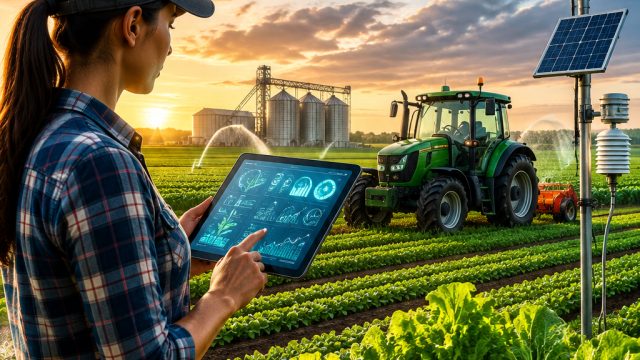
Enhancing Food Security: The Role of Tech in Modern Agriculture
As global populations surge and climate challenges intensify, the agricultural sector is at a pivotal crossroads. With technological advancements, farmers now have unprecedented tools at their disposal to enhance productivity, ensure sustainability, and ultimately bolster food security. Understanding the integration of technology in agriculture is crucial, especially in today's fast-paced world.
The Technological Revolution in Farming
Modern agriculture is undergoing a technological revolution that is transforming traditional farming practices. Innovations such as satellite imagery, drones, and precision farming techniques provide farmers with real-time data, enabling them to make informed decisions that enhance crop yields and optimize resource use.
Satellite Technology and Crop Monitoring
Satellite technology has emerged as a game-changer in the agricultural landscape. By providing detailed analytics and monitoring capabilities, farmers can track crop health, soil moisture levels, and even pest infestations from space. This capability allows for targeted interventions, reducing resource waste and increasing overall efficiency.
- Improved crop health monitoring: Detecting trends and issues early helps mitigate risks.
- Resource optimization: Efficient use of water and fertilizers leads to cost savings.
- Informed decision-making: Data-driven insights allow for timely and effective actions.
Embracing Sustainability through Innovation
As the demand for sustainable practices grows, innovative technologies are paving the way for eco-friendly agriculture. From artificial intelligence to vertical farming, farmers are adopting various methods to reduce their environmental footprint while meeting the food demands of the future.
AI and Machine Learning in Agriculture
Artificial intelligence (AI) and machine learning are playing a critical role in analyzing data patterns that can lead to improved agricultural practices. These technologies help in predicting weather patterns, assessing crop conditions, and managing supply chains more effectively.
- Predictive analytics: Anticipating crop yields and market fluctuations can enhance planning.
- Automated systems: From planting to harvesting, automation can significantly reduce labor costs.
- Decision support: AI tools provide actionable insights for better farming strategies.
Addressing Global Food Security Challenges
With the world's population projected to reach 9.7 billion by 2050, food security remains a pressing issue. The integration of technology in agriculture not only enhances productivity but also stabilizes markets, thus addressing the critical challenges of food accessibility.
Global Initiatives and Collaborative Efforts
Various initiatives are being launched globally to promote technological adoption in agriculture. Organizations are collaborating with farmers to provide access to modern tools and training, fostering a community dedicated to sustainable farming practices.
- Education and training programs: Empowering farmers with skills to utilize new technologies.
- Partnerships with tech firms: Bridging the gap between technology providers and farmers.
- Research and development: Continuous innovation to meet the evolving needs of agriculture.
The Future of Agriculture: A Technological Perspective
Looking ahead, the future of agriculture is undoubtedly intertwined with technological advancements. As farmers face increasing pressures from climate change, population growth, and market volatility, the adoption of innovative solutions will be vital in creating resilient agricultural systems.
To sum up, the intersection of technology and agriculture presents an opportunity for enhanced productivity, sustainability, and food security. By leveraging these advancements, the agricultural sector can meet the demands of the present while safeguarding resources for future generations.
Conclusion
As we navigate the complexities of modern agriculture, it is imperative to embrace the innovative technologies available today. Understanding their impact not only allows farmers to thrive but also contributes to global food security—a challenge that affects us all.
